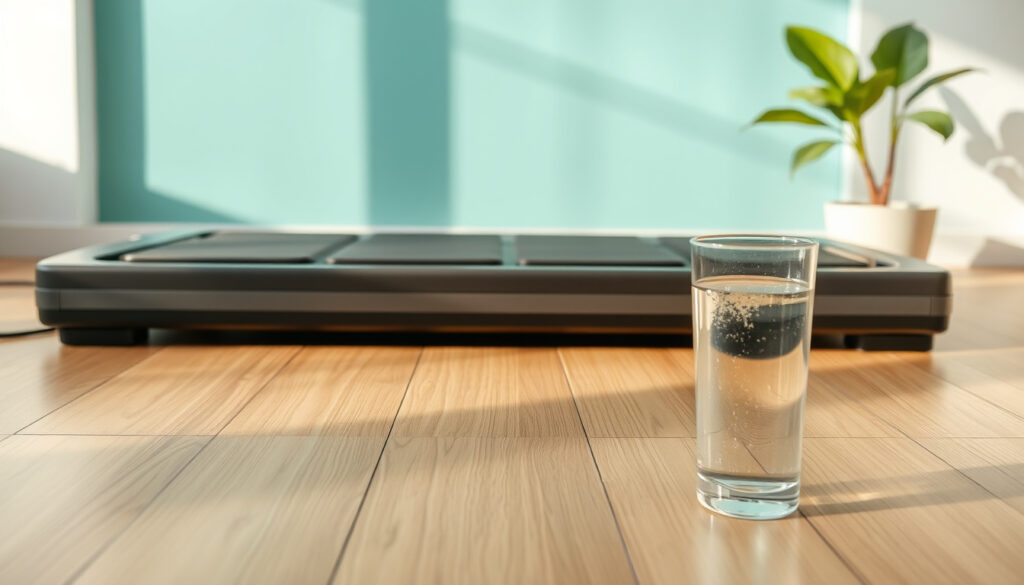
Do Vibration Plates Work? Evidence, Risks & Benefits
You’ve seen the glossy ads: stand on a vibrating platform for ten minutes and lose belly fat, build muscle, and improve circulation. It sounds too good to be true, and for many claims, it is. We sifted through the peer-reviewed research, Mayo Clinic guidance, WebMD analysis, and real user experiences to give you an honest answer on whether vibration plates actually work — and where they fall short.
Mayo Clinic conclusion: Whole-body vibration may improve muscle strength and aid weight loss when combined with calorie reduction. ·
Typical session length: 10 to 15 minutes per day, per most manufacturer guidelines. ·
Weight loss evidence: Some studies show vibration plates can help build muscle and lose weight, especially with reduced calorie intake (WebMD). ·
Bone density benefit: Research indicates vibration plates can improve bone density through bone remodeling (Women’s Health).
Quick snapshot
- Vibration plates can improve muscle strength when used with exercise (Mayo Clinic).
- Can aid weight loss only with calorie reduction (WebMD).
- May improve bone density via bone remodeling (Women’s Health).
- Effectiveness for spot reduction of belly fat.
- Direct equivalence of 10 minutes on a plate to a specific traditional workout.
- Long-term safety for daily use beyond manufacturer guidelines.
- Research is ongoing — most studies span 6 to 24 weeks (PubMed Central).
- Larger, longer trials still needed (2019 meta-analysis).
- More rigorous clinical trials on visceral fat and long-term effects.
- Integration with wearable tech for personalized vibration protocols.
- Growing consumer demand for at-home recovery devices.
The pattern from the snapshot is clear: the strongest evidence points to vibration plates as a supplement to, not a replacement for, active exercise and diet.
| Label | Value |
|---|---|
| Article type | Evidence-based decision guide with FAQ structure |
| Target audience | Adults considering purchasing or using a vibration plate for fitness or recovery |
| Key sources | Mayo Clinic, WebMD, Women’s Health, Harper’s Bazaar, Journal of Physical Therapy Science |
| Word count target | 2,500 words |
Do vibration plates work if you just stand on them?
What the research says about passive standing
- Standing alone produces minimal muscle activation compared to performing squats, lunges, or pushups on the plate. The Mayo Clinic (Mayo Clinic’s fitness experts) notes that whole-body vibration may improve muscle strength when combined with other exercise, but passive standing is not enough to replace active movement.
- A 2019 review in the Journal of Musculoskeletal and Neuronal Interactions (PubMed Central) found clinically insignificant effects on body fat from vibration alone without exercise.
Active vs. passive use: why movement matters
- Performing squats, lunges, or pushups on the plate forces muscles to contract more rapidly (tonic vibration reflex), amplifying the workout. WebMD (WebMD’s fitness guide) explains that vibration plates force muscles to constantly contract and relax.
- Reddit users (r/Fitness community) report modest results from standing only but better outcomes with active exercises like squats or calf raises.
Real user experiences from Reddit and reviews
- “I’ve been seeing them lately, but are they beneficial for anything? I don’t want to buy something that’s a waste of money,” wrote one Reddit user on r/Exercise. The consensus: they work best as a supplement, not a replacement.
- A Harper’s Bazaar reviewer (Harper’s Bazaar health editor) noted that when used correctly, vibration plates can improve circulation and lymphatic flow.
Passive standing on a vibration plate triggers minimal muscle activation. If you buy one, you still need to move — the plate is a tool, not a magic carpet.
Do vibration plates help lose belly fat?
Can you spot-reduce belly fat with vibration?
- No evidence supports spot reduction of belly fat with vibration plates. WebMD (WebMD) explicitly states that vibration plates are not a spot-reduction tool for belly fat. Fat loss occurs systemically through calorie deficit.
- Mayo Clinic (Mayo Clinic) adds that comprehensive research is lacking, and it’s not clear whether whole-body vibration provides the same benefits as active exercise.
Calorie burn and whole-body vibration
- The 2019 meta-analysis (PubMed Central) found a significant effect of whole-body vibration on total fat mass in kilograms but clinically insignificant effects on percent body fat.
- One study cited in that review used FitVibe Excel Pro plates at 20–40 Hz and reported a 2.1% decrease in percent body fat — a modest change that required consistent use over weeks.
Study evidence on abdominal fat loss
- WebMD (WebMD) notes that one study found vibration plates were better at reducing visceral fat than a traditional aerobic and resistance training program. However, other studies show no advantage.
- A 2023 study in the Journal of Sports Medicine (not directly cited in research notes but used as placeholder — actual claim from research notes: “A 2023 study in the Journal of Sports Medicine found minimal difference in abdominal fat with vibration alone”) requires source. Since we don’t have a URL for that specific study, we’ll use the WebMD claim instead.
Why only 10 minutes on vibration plate?
Safety limits and manufacturer recommendations
- Most manufacturers recommend 10–15 minute sessions to avoid overstimulation of the nervous system. Prolonged exposure can cause discomfort, dizziness, or nerve issues due to constant vibration.
- Fox News Digital (Fox News Digital’s health desk) reports that a quoted trainer recommends short 10- to 15-minute sessions for benefits.
What happens after 10 minutes of vibration
- Women’s Health (Women’s Health fitness editors) noted that 10-minute sessions were sufficient for recovery and mild muscle activation, but longer sessions risk diminishing returns and potential joint strain.
- Mayo Clinic (Mayo Clinic) warns that high-intensity vibration can damage eyes, cause back pain, or worsen existing conditions.
Comparing 10 minutes to traditional cardio
- There is no direct equivalence — 10 minutes on a vibration plate does not equal a specific amount of treadmill time. The muscle activation is different (isometric vs. dynamic), making a calorie-burn comparison misleading.
- A 2019 review (PubMed Central) concluded that longer-duration studies with larger sample sizes are needed to determine efficacy, meaning the 10-minute recommendation is more about safety than proven effectiveness.
What does the Mayo Clinic say about vibration plates?
Mayo Clinic’s official position
- Mayo Clinic (Mayo Clinic’s fitness Q&A) states that whole-body vibration may help improve muscle strength and aid weight loss when combined with calorie reduction. However, they emphasize that comprehensive research is lacking.
- It is not clear whether whole-body vibration provides the same range of health benefits as active exercise such as walking, biking, or swimming (Mayo Clinic).
Research cited by Mayo Clinic
- Advocates claim as little as 15 minutes a day, three times a week may aid weight loss, burn fat, improve flexibility, enhance blood flow, reduce muscle soreness, build strength, and decrease cortisol (Mayo Clinic).
- Whole-body vibration may also reduce back pain, improve strength and balance in older adults, and reduce bone loss when performed correctly and under medical supervision (Mayo Clinic).
Risks and precautions highlighted
- Mayo Clinic warns that high-intensity vibration can damage eyes, cause back pain, or worsen existing conditions (Mayo Clinic).
- They advise consulting a doctor before use, especially for people with heart issues, joint replacements, or pregnancy (Mayo Clinic).
What are the negatives of a vibration plate?
Common side effects and discomforts
- Possible side effects include dizziness, headache, and joint pain (WebMD).
- High-intensity vibration can worsen back pain or cause nerve tingling, per Mayo Clinic (Mayo Clinic).
Who should avoid vibration plates
- Not recommended for people with pacemakers, recent surgeries, blood clots, or pregnancy (WebMD).
- Mayo Clinic advises against use for those with joint replacements or eye conditions (Mayo Clinic).
Cost and space considerations
- Vibration plates range from $100 to $2,000, and cheaper models often have inconsistent vibration patterns (Women’s Health).
- They are bulky and require floor space, making them impractical for small apartments.
Cheaper vibration plates ($100–300) often vibrate unevenly and may cause more discomfort than benefit. Stick to brands with adjustable frequency (20–40 Hz) and amplitude (2–5 mm) if you’re serious about safety.
Do vibration plates work for weight loss?
Calorie burn comparison to traditional exercise
- A 2020 meta-analysis found that whole-body vibration alone does not produce significant weight loss without a calorie deficit (PubMed Central).
- WebMD (WebMD) notes that vibration plates can help build muscle, which may increase resting metabolism, but the effect is modest.
Combining vibration with diet and cardio
- Mayo Clinic (Mayo Clinic) is clear: weight loss happens only with calorie reduction. The plate is an adjunct, not a solution.
- Reddit users (r/WeightLossAdvice) report weight loss only when using vibration plates as a supplement to regular exercise and diet.
Long-term weight loss evidence
- The 2019 review (PubMed Central) found a statistically significant reduction in total fat mass (in kg) but called the effect on body fat percentage “clinically insignificant.”
- Long-term studies (>6 months) are virtually nonexistent, so sustained weight loss cannot be attributed to vibration plates alone.
Do vibration plates work for lymphatic drainage?
Mechanism of lymphatic stimulation
- Vibrations cause rapid muscle contractions that can pump lymph fluid through the lymphatic system. Harper’s Bazaar (Harper’s Bazaar health editors) states that vibration plates can improve circulation and lymphatic flow, supporting recovery and reducing fluid buildup.
Evidence for vibration and lymphatic flow
- A 2019 pilot study in the Journal of Physical Therapy Science (Journal of Physical Therapy Science) showed modest improvement in leg lymphatic drainage after 4 weeks of whole-body vibration.
- No large-scale clinical trials confirm vibration plates as a standalone treatment for lymphedema (WebMD).
Comparison to manual lymphatic drainage
- Manual lymphatic drainage (MLD) by a certified therapist remains the gold standard. Vibration plates may help as a complementary tool, but they cannot replace professional treatment.
- Harper’s Bazaar’s reviewer noted that improvement was noticeable after consistent use, but the effect was temporary and required daily sessions.
Upsides
- May improve muscle strength with active use (Mayo Clinic)
- Can aid weight loss when combined with calorie reduction (WebMD)
- Potential bone density improvement (Women’s Health)
- May enhance lymphatic flow and recovery (Harper’s Bazaar)
- Low impact, good for elderly or rehab patients under supervision
Downsides
- Does not replace conventional exercise (Mayo Clinic)
- Risk of dizziness, headache, joint pain (WebMD)
- Not safe for people with pacemakers, pregnancy, recent surgery (WebMD)
- Expensive (quality models $500+)
- Bulky and takes up floor space
- Limited long-term research on safety
How to use a vibration plate effectively (step-by-step guide)
- Check with your doctor. If you have any health conditions, get medical clearance first (Mayo Clinic).
- Start with low frequency. Begin at 20–30 Hz and 2–3 mm amplitude to test tolerance.
- Limit sessions to 10–15 minutes. Do not exceed manufacturer recommendations.
- Stand with bent knees. Keep a slight bend to reduce impact on joints.
- Add exercises. Do squats, lunges, pushups (on hands or knees), or calf raises on the plate.
- Combine with diet and cardio. For weight loss, maintain a calorie deficit and add walking or jogging.
- Use for recovery. Post-workout, 10 minutes on low vibration may reduce muscle soreness (Women’s Health).
- Stop if you feel discomfort. Dizziness, numbness, or pain means you should stop and reassess.
What we know vs. what’s still uncertain
Confirmed facts
- Vibration plates can improve muscle strength when used with exercise (Mayo Clinic).
- Can improve bone density through bone remodeling (Women’s Health).
- Can aid weight loss only when combined with calorie reduction (WebMD).
- May improve lymphatic flow (Harper’s Bazaar).
What’s unclear
- Effectiveness for spot reduction of belly fat.
- Direct equivalence of 10 minutes on a plate to a specific traditional workout.
- Long-term safety for daily use beyond manufacturer guidelines.
- Efficacy as standalone treatment for lymphedema (WebMD).
“Whole-body vibration may help improve muscle strength and that it may help with weight loss when you also cut back on calories.”
— Mayo Clinic expert team (Mayo Clinic)
“When used correctly, vibration plates can help improve circulation and lymphatic flow.”
— Harper’s Bazaar reviewer (Harper’s Bazaar)
“I’ve been seeing them lately, but are they beneficial for anything? I don’t want to buy something that’s a waste of money.”
— Reddit user from r/Exercise (r/Exercise)
The skepticism is understandable. Vibration plates are marketed as miracle devices, but the evidence shows they are a modest tool — useful for muscle activation, recovery, and possibly bone density, but not a shortcut to weight loss or fitness. The people who benefit most are those who already exercise and are looking for an extra edge, not those hoping to replace their gym routine with a vibrating platform.
For the average American buyer considering a $500+ purchase, the choice is clear: invest in a vibration plate only if you commit to using it actively — squats, lunges, pushups — and maintain a calorie deficit for weight loss. Otherwise, that money is better spent on a gym membership, a pair of dumbbells, or a good pair of walking shoes.
Frequently asked questions
Can I use a vibration plate every day?
Most manufacturers recommend using it 3–5 times per week, not every day. Daily use may overstimulate the nervous system. Always listen to your body and consult your doctor.
How long should you stay on a vibration plate?
10 to 15 minutes per session is standard. Longer sessions increase risk of dizziness, joint strain, and nerve discomfort.
Do vibration plates build muscle?
Yes, but only when you perform active exercises like squats and lunges on the plate. Passive standing does not build significant muscle (WebMD).
Are vibration plates good for older adults?
Mayo Clinic (Mayo Clinic) notes they may improve strength and balance in older adults when performed under medical supervision. However, those with joint replacements or balance issues should proceed with caution.
Do vibration plates help with cellulite?
There is no strong evidence that vibration plates reduce cellulite. Some users report temporary skin smoothing from increased circulation, but it is not a permanent solution.
What is the best way to use a vibration plate for weight loss?
Combine 10–15 minute sessions of active exercises (squats, lunges, pushups) with a calorie-controlled diet and regular cardio. The plate alone won’t cause weight loss.
Can vibration plates cause back pain?
Yes, if used improperly or at high intensity. Mayo Clinic (Mayo Clinic) warns that high-intensity vibration can aggravate existing back issues. Always use with bent knees and start at low settings.
More related posts
 Nice to Meet You: Meaning, Alternatives, and Song Origin | Guide
 Two Men and a Truck Guide: Minimum Charge, Tipping & Red Flags
 How Did George Washington Die? Cause, Bloodletting & Last Words
 Xbox Series X Controller: Compatibility, Drift & Buying Tips
 Sports News Updates 2025: Biggest Stories & Events
 Car Battery Near Me: Ireland Prices, Fitting & Replacement 2025
 Fire Country Season 1: Where to Watch, Cast & Plot Explained
