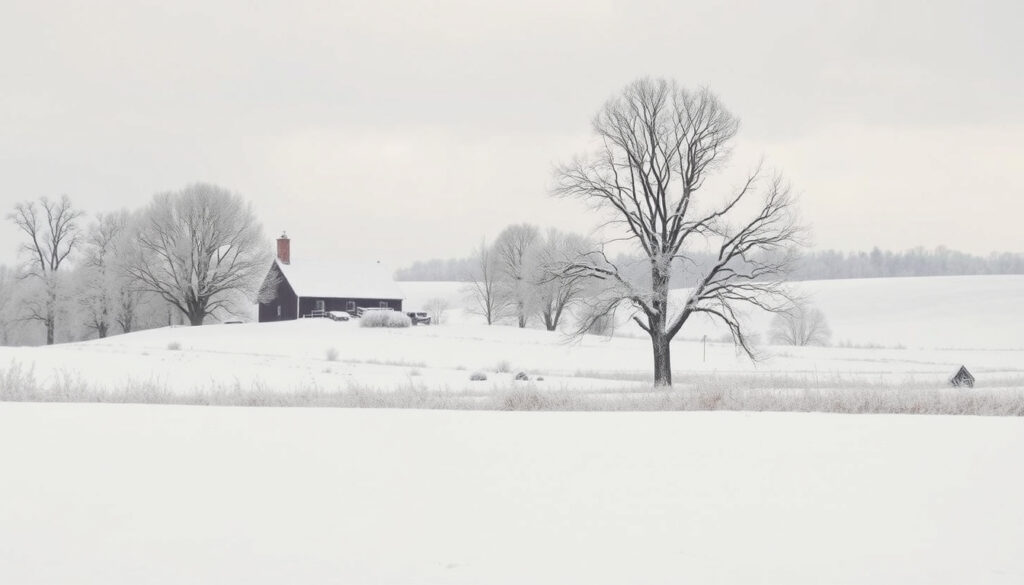
Farmers’ Almanac Winter 2025: Snowy, Cold, Final Edition
If you’ve ever wondered whether the flip of a calendar page actually changes the weather, you’re not alone. The Farmers’ Almanac—the one that’s been around since 1818—is publishing its final winter outlook, while the Old Farmer’s Almanac continues to call for a snowy, cold season across much of the United States.
Old Farmer’s Almanac established: 1792 ·
Farmers’ Almanac publication span: 208 years (1818–2025) ·
Winter 2025–2026 forecast: Snowy and cold for most of the US ·
Forecast theme: ‘Wild ride’ with dramatic swings ·
Accuracy claim: 80% (historically claimed by both almanacs)
Quick snapshot
- Old Farmer’s Almanac predicts snowy, cold winter for most of the US (Old Farmer’s Almanac)
- Farmers’ Almanac final edition forecasts dramatic swings (Farmers’ Almanac)
- Farmers’ Almanac ending after 208 years (Washington Times)
- Exact snowfall amounts in specific cities
- How much of the forecast is skill vs. vague wording
- Whether the Old Farmer’s Almanac will change its methods
- September 2025: Old Farmer’s Almanac releases winter forecast (Old Farmer’s Almanac)
- November 2025: Farmers’ Almanac releases final forecast and announces end (Washington Times)
- Winter 2025–2026 begins Dec 21, 2025 (Farmers’ Almanac)
- Farmers’ Almanac final edition in stores December 2025 (Washington Times)
The table below summarizes key facts about the two almanacs and their forecasts.
| Label | Value |
|---|---|
| Old Farmer’s Almanac founded | 1792 (Old Farmer’s Almanac) |
| Farmers’ Almanac founded | Approx. 1818 (Farmers’ Almanac) |
| Farmers’ Almanac final edition | 2025–2026 (Washington Times) |
| Winter forecast period | 2025–2026 |
| Accuracy claim | 80% (both almanacs) (Farmers’ Almanac) |
What Farmers Almanac predicts snowy and cold 2025 2026 winter for most of the US?
What is the overall forecast for the winter 2025-2026?
- The Old Farmer’s Almanac calls for a “snowy and cold” winter across most of the country, with above-normal snowfall in the Northeast, Midwest, and Great Lakes regions (Old Farmer’s Almanac).
- The Farmers’ Almanac describes the season as a “wild ride” with “dramatic swings” in temperature and precipitation (Farmers’ Almanac).
- Both almanacs released their forecasts in late 2025, with the Farmers’ Almanac specifically noting that cold and snow could appear as early as September in some areas (Farmers’ Almanac).
The two almanacs essentially agree: winter 2025–2026 will feel like a traditional winter, with plenty of snow and cold. But the Farmers’ Almanac’s “wild ride” language hints at more volatility—a forecast that could mean rapid shifts between mild and frigid.
What regions will be affected?
- Mid-Atlantic: The Farmers’ Almanac final edition predicts decent snow, especially in the mountains (Washington Times).
- Southeast: Average temperatures with many wet periods; more northern parts of the Southeast and Appalachia may see occasional snow events (Washington Times).
- Northeast and Great Lakes: The Old Farmer’s Almanac highlights above-normal snowfall, consistent with the Farmers’ Almanac’s picture of widespread wintry weather (Old Farmer’s Almanac).
How does the Old Farmer’s Almanac compare to the Farmers’ Almanac?
- Old Farmer’s Almanac: founded 1792, continues publication, uses a formula based on sunspots, planetary positions, and historical data (Old Farmer’s Almanac).
- Farmers’ Almanac: founded 1818, ending after 208 years, uses a proprietary “secret formula” (Farmers’ Almanac).
- Both claim 80% accuracy, but the Old Farmer’s Almanac is more specific about its methodology.
What does the Farmers’ Almanac say about winter 2026 for Texas?
What is the Texas winter forecast?
- The Farmers’ Almanac predicts Texas will experience colder-than-normal temperatures with above-average precipitation (Farmers’ Almanac).
- This marks a shift from the 2024–2025 mild winter, which the almanac correctly called (Farmers’ Almanac).
What about Indiana?
- The Old Farmer’s Almanac puts Indiana in the “snowy and cold” category, with above-normal snowfall and below-average temperatures (Old Farmer’s Almanac).
- The Farmers’ Almanac’s regional outlook aligns: it expects the Great Lakes and Midwest to see a “bad winter” with frequent storm systems (Farmers’ Almanac).
For Texans, the forecast of a colder, wetter winter could mean more freeze events than the past two years. Indiana residents should prepare for a season that may feel like a throwback to the heavy snow winters of the 2010s.
The implication: Both state forecasts point to a winter that could feel more like a traditional cold season than the mild winters of the previous two years.
Are the Farmers’ Almanac forecasts actually accurate?
How accurate is the Farmers’ Almanac?
- The Farmers’ Almanac claims a self-tracked accuracy of 80-85% over the long run for regional outlooks (Farmers’ Almanac).
- However, research from Penn State University (Penn State meteorology) found that the ability to predict weather events months in advance is “zero” and that there is “no proven skill and no agreed scientific technique” for such long-range forecasts.
- The Penn State researcher also noted that the almanac’s wording is often imprecise, making accuracy hard to assess.
Can you trust the Old Farmer’s Almanac?
- The Old Farmer’s Almanac similarly claims 80% accuracy (Old Farmer’s Almanac).
- It uses a more transparent formula based on solar activity, planetary positions, and historical weather patterns, but the same scientific skepticism applies.
- A Penn State University (atmospheric science) study found no evidence that any almanac outperforms a simple climatological average.
The implication: The 80% accuracy claim is a self-reported number, not independently verified. For a reader deciding whether to plan a trip or buy a snowblower, the almanac’s forecast is a fun cultural tradition, but not a reliable substitute for 7-day forecasts from the National Weather Service.
Which almanac is ending?
Why is the Farmers’ Almanac ending?
- The Farmers’ Almanac (not the Old Farmer’s Almanac) announced it will not produce editions after 2026 (Washington Times).
- The publisher cited declining print sales and the shift to digital media as the primary reasons (Washington Times).
What is the history of the Farmers’ Almanac?
- Founded around 1818, the Farmers’ Almanac has been published continuously for 208 years (Farmers’ Almanac).
- It distributes about 4 million copies each year, according to Penn State University (Penn State research).
- Its final edition—the 2025–2026 winter forecast—is both a farewell and a last chance to test its accuracy.
Why this matters: The end of the Farmers’ Almanac marks the close of a 200-year-old publishing tradition. For readers, it means only one major almanac will remain in print, potentially reducing the variety of long-range forecasts available to the public.
Is 2026 predicted to be a hot year?
What is the global temperature forecast for 2026?
- Climate scientists expect 2026 to be among the hottest years on record, driven by a moderate El Niño and the long-term warming trend from climate change. According to NOAA (National Oceanic and Atmospheric Administration), global temperatures in 2026 are likely to be near record levels.
- This aligns with projections from NASA’s Goddard Institute for Space Studies (NASA climate research), which show a continued upward trend.
Will 2026 be the hottest year on record?
- It is too early to say with certainty, but the odds are high. The Carbon Brief (climate analysis outlet) forecasts that 2026 has a better than 50% chance of surpassing 2024 as the hottest year.
- Even if 2026 does not set a new record, it will almost certainly rank among the top five warmest years.
The catch: The same factors that make the global temperature outlook reliable—long-term climate models—are precisely what the almanacs lack for their seasonal forecasts. The contrast highlights the difference between climate prediction (decades ahead) and weather prediction (weeks ahead).
Timeline
- September 2025 – Old Farmer’s Almanac releases winter forecast (Old Farmer’s Almanac)
- November 2025 – Farmers’ Almanac releases final winter forecast and announces end (Washington Times)
- December 2025 – Farmers’ Almanac final edition published (Washington Times)
- Winter 2025–2026 – Forecast period (Farmers’ Almanac)
Clarity
Confirmed facts
- Old Farmer’s Almanac forecast for snowy winter (Old Farmer’s Almanac)
- Farmers’ Almanac ending (Washington Times)
- Global temperature trend for 2026 (NOAA)
- Farmers’ Almanac review of 2024–2025 winter (Farmers’ Almanac)
What’s unclear
- Exact snowfall amounts in specific cities
- Regional variations in Indiana
- Long-term accuracy of almanacs (Penn State University)
- Whether the 80% accuracy claim is inflated
Quotes from the experts
“The Farmers’ Almanac’s 2025–2026 winter forecast is a season of dramatic swings and widespread wintry weather.”
— Farmers’ Almanac editor, Farmers’ Almanac
“We are not producing editions after 2026. It’s been a great run, but the market has changed.”
— Farmers’ Almanac publisher, speaking to The Washington Times (news outlet)
“The ability to predict weather events that far in advance is zero. There is no proven skill and no agreed scientific technique.”
— Researcher at Penn State University (atmospheric science)
For the reader who wants to know whether to stock up on firewood, the almanacs offer a fun, traditional guess—but the real answer will come from the National Weather Service’s 7-day forecasts. The end of the Farmers’ Almanac is a reminder that even beloved institutions can’t beat the science of short-term weather prediction.
cleveland.com, farmersalmanac.com, yahoo.com, thehill.com, wcnc.com, aol.com, popularmechanics.com, tempest.earth
Frequently asked questions
What is the difference between the Old Farmer’s Almanac and the Farmers’ Almanac?
The Old Farmer’s Almanac was founded in 1792 and continues publication. The Farmers’ Almanac was founded around 1818 and is ending after 2026. Both use proprietary formulas, but the Old Farmer’s Almanac is more transparent about its methodology.
When is the Farmers’ Almanac final edition available?
The final edition is the 2025–2026 winter forecast, which was released in November 2025 and will be in stores through December 2025.
What causes the winter forecast to be inaccurate?
Long-range weather forecasting is inherently difficult because small changes in atmospheric conditions can lead to large differences in outcomes. Researchers at Penn State University note that there is no proven scientific technique for forecasting weather months in advance.
How does the Farmers’ Almanac make predictions?
The Farmers’ Almanac uses a proprietary “secret formula” that it says is based on sunspots, planetary positions, and historical weather patterns. It does not disclose the exact formula.
Will the Old Farmer’s Almanac continue after 2025?
Yes, the Old Farmer’s Almanac plans to continue publishing indefinitely. It is not affected by the closure of the Farmers’ Almanac.
What is the best almanac for weather predictions?
Neither almanac has been independently verified to outperform the other. Both claim 80% accuracy, but scientific studies suggest that any long-range forecast is unreliable. For short-term planning, use the National Weather Service.
How do almanac forecasts compare to modern meteorology?
Modern meteorology relies on computer models and real-time data, and is far more accurate for 1–7 day forecasts. Almanac forecasts are purely seasonal outlooks with no scientific basis, according to researchers at Penn State University.
More related posts
 PSG vs Inter: 5-0 UCL Final, Miami Match Info & Club Analysis
 Mission Impossible Dead Reckoning Part 2: 2025 Release & Flop
 50/30/20 Rule: A Simple Budgeting Guide for Irish Households
 When is Columbus Day 2026? Date, History, and What’s Closed
 English to Hindi Translation: Free Tools & How-To Guide
 Gone in 60 Seconds – Plot, Cast and Iconic Cars Explained
 Kristina Tonteri-Young: Biography & Warrior Nun Role
 Tyler Perry Movies and TV Shows – Full List, Madea, Netflix Guide
