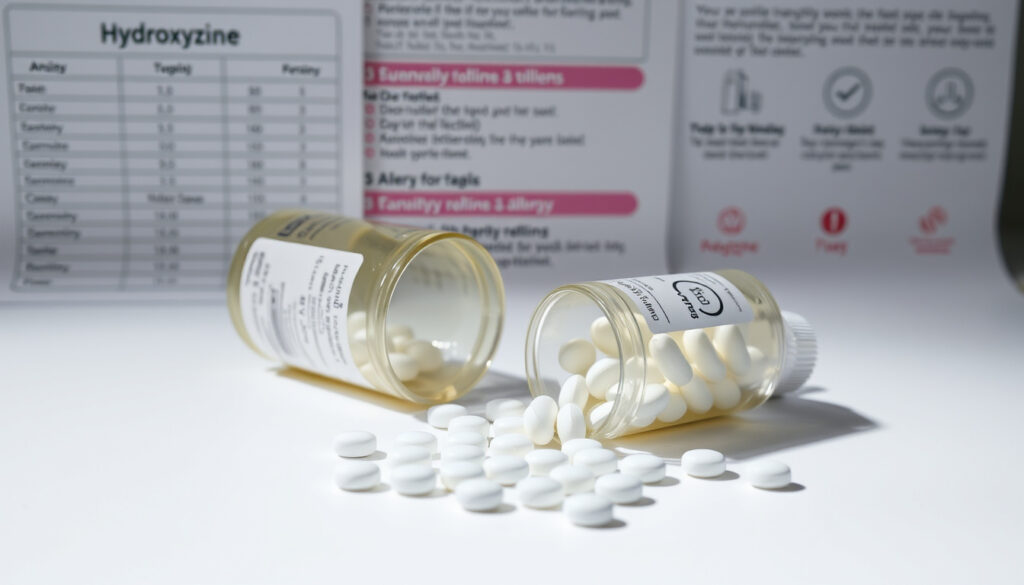
What Is Hydroxyzine Used For? Uses, Dosage & Side Effects
If you’ve been prescribed hydroxyzine for anxiety, you probably have questions—starting with why your doctor chose an antihistamine instead of a benzodiazepine. The short answer: hydroxyzine works on the same anxiety pathways without the risk of dependence that comes with medications like Xanax. It calms symptoms within 15-60 minutes, and effects typically last 4-6 hours, according to K Health. Beyond anxiety, it’s also used for allergic itching and pre-surgical sedation.
Primary uses: Anxiety, allergies, itching · Common dosage: 25 mg · Key side effects: Drowsiness, dry mouth · Compared to: Xanax (non-addictive alternative) · Approved for: Anxiety and tension relief
Quick snapshot
- How individual genetics affect efficacy
- Long-term studies beyond 4 months
- Head-to-head trials with newer GAD treatments
- SSRIs remain first-line for chronic GAD
- Hydroxyzine for short-term or adjunctive use
- Ongoing review of dependence risks
| Attribute | Value |
|---|---|
| Drug class | Antihistamine (H-1 receptor antagonist) |
| Primary use | Anxiety and allergies |
| Common dose | 25 mg |
| Onset | 15-60 minutes |
| Duration | 4-6 hours |
| Max daily doses | Up to 4 times daily |
| FDA approved for anxiety | Yes |
| Dependence risk | None (non-controlled) |
What is hydroxyzine used for?
Hydroxyzine is FDA-approved for treating anxiety and tension, particularly when linked to nervous conditions. It’s a first-generation H-1 receptor antihistamine that produces sedative effects by blocking histamine receptors in the brain, according to K Health. Beyond anxiety, it treats itching from urticaria (hives) and dermatitis, and healthcare providers use it for pre-surgical sedation.
Anxiety and tension relief
The drug works by depressing activity in the central nervous system, which helps calm acute anxiety symptoms. For generalized anxiety disorder (GAD), hydroxyzine demonstrated superiority to placebo in clinical studies, though the Cochrane review notes limitations including sedation and potential bias in smaller trials, according to PsychPlus. It’s prescribed for short-term use (less than 4 months), not preventive daily dosing, per K Health.
Allergy symptoms and itching
As an antihistamine, hydroxyzine blocks histamine that causes allergic reactions. This makes it effective for hives, skin irritation, and allergic itching where other antihistamines haven’t provided sufficient relief, according to MedicineNet.
Pre-surgical sedation
Healthcare providers sometimes prescribe hydroxyzine before surgery for its calming effects. A 1993 study published in PubMed compared alprazolam and hydroxyzine as oral premedicants and found both safe and effective, though alprazolam showed preferable efficacy for this specific use.
Is hydroxyzine a strong sleeping pill?
Hydroxyzine’s sedative properties can aid sleep, but it’s not primarily marketed or approved as a sleeping medication. The drowsiness it causes is a side effect of its antihistamine action, not a targeted sleep mechanism, according to MedicineNet. For someone asking whether hydroxyzine functions as a sleep aid: yes, indirectly—but the effect varies significantly between individuals.
Benefits for sleep
Because hydroxyzine causes dose-dependent sedation, lower doses may feel like mild relaxation while higher doses produce stronger drowsiness. This makes it useful for anxiety-related insomnia where calming the nervous system indirectly supports sleep onset, according to RedBox Rx.
Comparison to other sedatives
Unlike prescription sleep aids or benzodiazepines, hydroxyzine doesn’t target sleep pathways directly. Its sedating effect competes with its intended anxiolytic purpose—take too much for sleep and you may feel groggy the next day. Blossom Health notes that hydroxyzine’s 30-60 minute onset is slower than Xanax’s 15-30 minutes, making it less suitable for acute panic situations requiring immediate sedation.
Is 25mg of hydroxyzine strong for anxiety?
For most adults, 25 mg represents a standard starting dose for anxiety, according to Talkiatry. The drug is available in multiple formulations (10, 25, 50, and 100 mg tablets and capsules), allowing doctors to titrate based on response and tolerance. At 25 mg, you’re getting a moderate dose—not the lowest available, but far from the maximum.
Standard dosing for anxiety
Providers typically prescribe 25-50 mg up to four times daily as needed for anxiety, though some patients respond well to lower doses while others require higher amounts, per Talkiatry. The 25 mg dose strikes a balance for many: enough to produce noticeable calming effects without excessive drowsiness.
Normal hydroxyzine dose
Dosage depends on your specific condition, medical history, and how your body metabolizes the drug. The full therapeutic effect develops within approximately 2 hours of taking hydroxyzine, with peak effects around that time, according to K Health. Your doctor may start at 25 mg and adjust upward or downward based on how you respond.
What are the worst side effects of hydroxyzine?
Most people experience mild side effects like drowsiness and dry mouth, but hydroxyzine carries rare but serious risks worth knowing. Understanding the spectrum helps you recognize when to call your doctor versus when to simply ride out a minor reaction, according to RedBox Rx.
Common side effects
The most frequently reported hydroxyzine side effects include drowsiness (often the intended effect), dry mouth, dizziness, headache, constipation, and mild confusion, per RedBox Rx. These tend to diminish as your body adjusts, typically within the first week of regular use.
Serious risks
Rare but serious reactions include QT prolongation—a heart rhythm abnormality that can be dangerous—and seizures, which occur uncommonly according to MedicineNet. The drug also causes anticholinergic effects like urinary retention, which disproportionately affect elderly patients, per PsychPlus. Combining hydroxyzine with Xanax or other central nervous system depressants amplifies drowsiness and impairment and is not recommended, per RedBox Rx.
Is hydroxyzine similar to Xanax?
Both hydroxyzine and Xanax treat anxiety, but they work through completely different mechanisms and carry different risk profiles. The comparison matters because millions of patients face this choice, and the differences can be life-altering for those with substance abuse history or long-term treatment goals, according to Talkspace.
Key differences
Hydroxyzine is an antihistamine; Xanax (alprazolam) is a benzodiazepine. Hydroxyzine has no potential for habit-forming or dependence, while Xanax is a Schedule IV controlled substance with recognized misuse potential, per Talkiatry. Xanax acts faster (15-30 minutes onset) versus hydroxyzine’s 15-60 minutes, making it more suitable for acute panic attacks, per RedBox Rx.
When to choose each
Dr. Dion Metzger from Talkspace notes: “Hydroxyzine is not as potent as Xanax and does not have a risk for dependence. This would be a better choice for patients with a history of substance dependence.” Xanax provides faster relief for panic attacks, peaking in 1-2 hours, per Recovery Beach. Hydroxyzine is preferable for generalized anxiety requiring multiple daily doses, while Xanax suits acute episodic use under careful supervision.
Three key parameters distinguish these two medications for anxiety treatment.
| Factor | Hydroxyzine | Xanax |
|---|---|---|
| Drug class | Antihistamine (H-1 blocker) | Benzodiazepine |
| Onset | 15-60 minutes | 15-30 minutes |
| Duration | 4-6 hours | 4-6 hours (IR); 8-12 hours (some reports) |
| Dependence risk | None | High (Schedule IV controlled) |
| Memory effects | Minimal | Memory loss reported |
| Withdrawal risk | Minimal | Seizures, rebound anxiety |
| Best for | GAD, daily management | Acute panic, short-term use |
The implication here is significant: while both drugs offer similar duration windows (4-6 hours), the comparison reveals fundamentally different tools for fundamentally different situations. Hydroxyzine provides a safety profile that Xanax cannot match for patients with addiction concerns.
The medications come in multiple dosage forms to accommodate different needs and patient preferences.
| Formulation | Available strengths | Typical use |
|---|---|---|
| Tablet | 10 mg, 25 mg, 50 mg, 100 mg | Most common oral form |
| Capsule | 25 mg (common) | Swallowing ease |
| Syrup | Varies by prescription | Pediatric or swallowing difficulties |
| Injection | Used in clinical settings | Pre-surgical sedation |
The pattern across formulations shows that 25 mg appears as both tablet and capsule, reflecting its status as a common starting dose for anxiety management. Healthcare providers select the formulation based on patient needs and swallowing ability.
Upsides
- No dependence or habit-forming risk
- FDA-approved for anxiety specifically
- Non-controlled substance (no prescription monitoring required)
- Effective for GAD per clinical studies
- Useful for patients with substance abuse history
- Available in multiple strengths for flexible dosing
Downsides
- Slower onset than benzodiazepines
- Not suitable for acute panic attacks
- Causes drowsiness affecting daily function
- Rare but serious QT prolongation risk
- Limited to short-term use (<4 months)
- Not first-line for chronic anxiety (SSRIs preferred)
What the evidence shows
The clinical picture around hydroxyzine includes confirmed findings and areas where research remains limited.
- Hydroxyzine is FDA-approved for anxiety and demonstrated superiority to placebo in clinical trials
- Side effects include drowsiness, dry mouth, and constipation—generally manageable
- Hydroxyzine is not a controlled substance and carries no dependence risk
- Both hydroxyzine and Xanax are unsafe during pregnancy and breastfeeding
- Strength as a sleeping pill varies significantly between individuals
- Long-term efficacy studies beyond 4 months are lacking
- Individual genetic factors may influence response
“Hydroxyzine is not as potent as Xanax and does not have a risk for dependence. This would be a better choice for patients with a history of substance dependence.”
— Dr. Dion Metzger, Talkspace therapist
“This study shows that alprazolam and hydroxyzine are safe and efficient oral premedicants. However, alprazolam is preferable to hydroxyzine.”
— PubMed clinical researchers (1993)
PsychPlus clinicians observe that both drugs are effective for anxiety, but current APA guidelines recommend SSRIs as first-line treatment for chronic generalized anxiety disorder. Hydroxyzine and benzodiazepines serve as short-term or adjunctive options—not replacements for comprehensive anxiety treatment plans.
PsychPlus researchers point out that the 1993 PubMed study comparing alprazolam and hydroxyzine remains one of the few head-to-head clinical trials. More recent data relies heavily on retrospective analysis and clinical experience rather than large randomized trials.
For patients weighing anxiety treatment options, the choice between hydroxyzine and Xanax hinges on one factor above all others: dependence. Hydroxyzine provides meaningful symptom relief without the addiction machinery that makes Xanax a controlled substance requiring careful monitoring, per Talkiatry. Both carry similar durations (4-6 hours) and comparable efficacy for generalized anxiety, but only one lets you avoid the conversation about dependence, tolerance, and withdrawal.
Related reading: How I Cured My Neuropathy – Real Recovery Strategies · Is Gatorade Good for You? Benefits, Risks Explained
recoverybeach.com, joinblossomhealth.com, psychplus.com, telapsychiatry.com, singlecare.com
Frequently asked questions
What is hydroxyzine HCl 25 mg used for?
Hydroxyzine HCl 25 mg treats anxiety, tension, allergic itching, and skin conditions. The HCl designation refers to the hydrochloride salt form, which is the most common pharmaceutical formulation. At 25 mg, it’s a standard starting dose for adult anxiety, typically taken up to four times daily as needed, per Talkiatry.
Is hydroxyzine safe?
Hydroxyzine is FDA-approved and considered safe when prescribed by a healthcare provider and taken as directed. However, it carries rare risks including QT prolongation and seizures, and is not recommended during pregnancy or breastfeeding, per K Health. Safety depends on proper dosing, medical history review, and avoiding interactions with other CNS depressants.
Can I take 2 hydroxyzine 25 mg at the same time?
Taking two 25 mg tablets (50 mg total) at once exceeds typical single-dose recommendations and increases side effect risks, particularly drowsiness and anticholinergic effects. The maximum single dose varies by formulation and patient factors. Never adjust your dose without consulting your healthcare provider—they may intentionally prescribe 50 mg doses, but this should be under professional guidance.
Why is hydroxyzine a high-risk medication?
Hydroxyzine carries elevated risk primarily due to its potential for QT prolongation (a heart rhythm abnormality) and its sedative effects that impair driving and operating machinery, per PsychPlus. It’s also contraindicated in pregnancy and requires caution in elderly patients due to anticholinergic effects. These risks—not dependence—are why “high-risk” applies.
What are three common side effects?
The three most commonly reported hydroxyzine side effects are drowsiness, dry mouth, and dizziness, per RedBox Rx. These occur in a significant percentage of users and tend to be most pronounced when starting treatment or increasing dosage. Most side effects diminish within the first week of regular use.
Why does hydroxyzine make me feel so good?
The “feel good” effect stems from hydroxyzine’s action on H-1 histamine receptors in the brain, producing sedation that many patients experience as relaxation or anxiety relief, per K Health. The antihistamine mechanism also causes drowsiness, which can feel pleasant if you’re accustomed to anxiety’s hyperarousal state. However, this isn’t euphoria—it’s symptom reduction. If you feel significantly altered or euphoric, discuss this with your doctor.
More related posts
 Cast of My Life with the Walter Boys: Ages, Cast List & Updates
 Amyl and the Sniffers: Cancellation, Name, Tour & Amy Taylor
 Eyelash Extensions Near Me: Prices, Salons & Care Tips
 White Dress for Women in Ireland: Best Retailers 2025
 Sports News Updates 2025: Biggest Stories & Events
 Light Spring Color Palette: Colors, Metals & Celebrities
 The Summer I Turned Pretty Season 1: Recap, Ending & Guide
 PlayStation 30th Anniversary Controller: Price, Review, Specs
