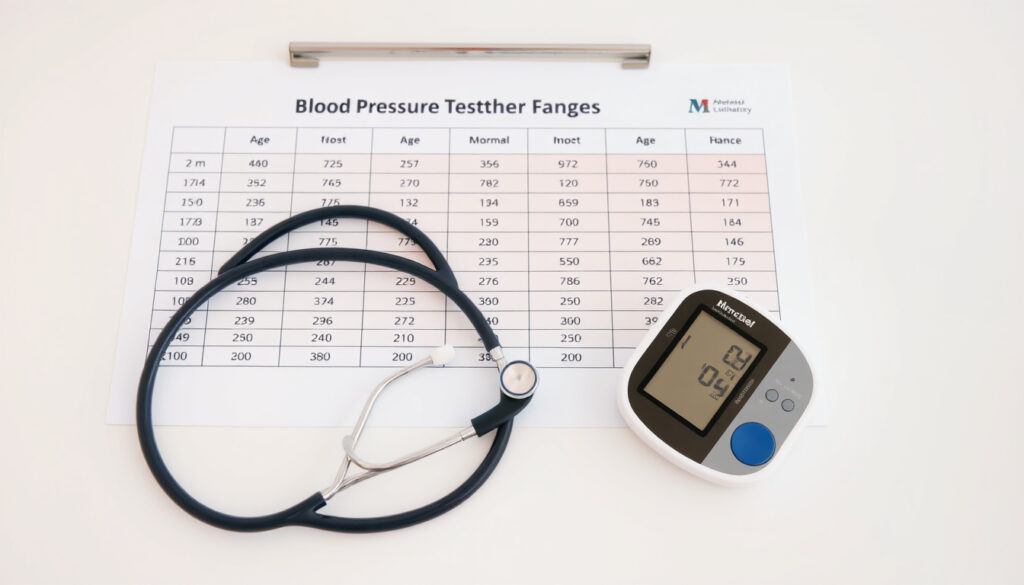
Normal Blood Pressure Range: By Age, Charts & When to Seek Help
Few numbers carry as much weight as the two that appear on a blood pressure monitor, and whether you’re checking it at a pharmacy in Dublin or tracking readings at home in London, understanding what those digits mean can feel like decoding a health puzzle. This article breaks down the normal blood pressure range across different age groups and guidelines, so you know when to relax and when to act.
Normal blood pressure: less than 120/80 mmHg ·
Elevated blood pressure: 120-129 systolic and less than 80 diastolic ·
Hypertension Stage 1: 130-139 systolic or 80-89 diastolic ·
Hypertension Stage 2: 140 or higher systolic or 90 or higher diastolic ·
Hypertensive crisis: 180/120 mmHg or higher, requires immediate medical attention ·
Prevalence: affects about 1 in 3 adults globally
Quick snapshot
- Below 120/80 mmHg is healthy. (British Heart Foundation)
- Systolic and diastolic numbers explained. (British Heart Foundation)
- Why age and health matter. (British Heart Foundation)
- Young adults: similar to general adult range. (Heart Research Institute)
- Seniors: slightly higher targets allowed. (British Heart Foundation)
- Women: hormonal effects on readings. (Heart Research Institute)
- Reduce salt, increase potassium. (British Heart Foundation)
- Stay hydrated, but water isn’t a cure. (Harvard Health)
- DASH diet and regular exercise. (British Heart Foundation)
Six key thresholds define the spectrum from normal to crisis, one pattern: the numbers rise with age and risk climbs silently.
| Category | Blood Pressure Range |
|---|---|
| Normal adult BP | <120/80 mmHg |
| Elevated BP | 120-129 / <80 |
| Hypertension Stage 1 | 130-139 / 80-89 |
| Hypertension Stage 2 | ≥140 / ≥90 |
| Hypertensive crisis | ≥180 / ≥120 |
| Ideal for 70+ (UK/Ireland) | <150/90 |
What blood pressure is normal by age?
Normal blood pressure ranges for adults (18-64)
- For most adults, a healthy reading sits below 120/80 mmHg, according to the British Heart Foundation (UK heart charity).
- The UK Government (public health authority) defines ideal adult blood pressure as between 90/60 and 120/80 mmHg.
- Readings between 120/80 and 140/90 are considered high-normal and warrant monitoring.
Age-specific targets for seniors (65+)
- The British Heart Foundation advises that for people over 80, the ideal clinic blood pressure is under 150/90 mmHg (or 145/85 at home).
- US guidelines from the American Heart Association (cardiovascular medical authority) recommend a target below 140/90 for older adults who are otherwise healthy.
- Lower targets may be appropriate if well-tolerated, but overtreatment in frail elderly carries risks of falls and fainting.
Blood pressure norms for women
- Average blood pressure for women aged 18-39 is around 110/68 mmHg; for men the same age it is 119/70, reports the Heart Research Institute (Australian cardiovascular research centre).
- After menopause, women’s systolic pressures tend to rise, narrowing the gap with men.
- Pregnancy and hormonal contraception can also affect readings, so context matters.
Regional differences (Ireland, UK, US)
- Ireland: The Irish Heart Foundation (national heart health charity) recommends an ideal target below 120/70 mmHg.
- UK: The NHS and NICE set the hypertension threshold at 140/90 in clinic, consistent with the British Heart Foundation’s staging.
- US: The AHA/ACC guideline lowered the hypertension cutoff to 130/80 in 2017, meaning more Americans are classified as hypertensive earlier.
The implication: a “normal” reading depends on which country’s rules you follow and how old you are — a person aged 75 with a 145/85 reading would be fine in Dublin but flagged in Dallas.
Is BP 140-90 normal range?
Interpretation of 140/90 mmHg
- A reading of 140/90 mmHg is not normal. Under both UK and US guidelines it falls into hypertension territory. The British Heart Foundation classes it as stage 1 hypertension (140/90 to 159/99 in clinic).
- The American Heart Association considers 140/90 stage 2 hypertension, because their threshold for stage 1 is 130/80.
When 140/90 is considered stage 2 hypertension
- Under ACC/AHA rules, 140/90 qualifies as stage 2, requiring prompt lifestyle changes and often medication.
- Under NICE rules, a consistent 140/90 in clinic with home readings of 135/85 or above confirms hypertension.
What 140/70 indicates
- A reading of 140/70 is a mixed picture: systolic is high (stage 2 in US, stage 1 in UK), while diastolic is normal. The Heart Research Institute notes that an isolated high systolic is common in older adults and still carries cardiovascular risk.
The catch: many people mistakenly think 140/70 is “good because the bottom number is low” — but the top number drives risk, and both numbers matter.
What is an acceptable blood pressure for a 70 year old?
Targets for older adults
- For a 70-year-old, the British Heart Foundation considers clinic readings below 150/90 acceptable, consistent with NICE’s advice for over-80s.
- The American Heart Association recommends a goal below 140/90 for generally healthy older adults, but individualisation is key.
Risks of overtreatment in the elderly
- Aggressively lowering BP below 120/80 in a frail 75-year-old can cause dizziness, falls, and kidney injury. The NHS (UK national health service) advises that treatment targets should be tailored.
Comparison with younger adult ranges
- Younger adults aim for below 120/80, while seniors can tolerate slightly higher readings because their arteries stiffen with age. The Heart Research Institute shows average BP for 60+ women is 139/68 and for men 133/69.
What this means: age 70 isn’t a free pass to ignore 150/90 — it’s a signal to monitor closely and discuss medication thresholds with your doctor.
Should I go to the hospital if my blood pressure is 140/90?
When to seek emergency care
- A single reading of 140/90 with no symptoms is not an emergency. However, the NHS (UK health service) advises emergency care if BP reaches 180/120 or higher, especially with chest pain, severe headache, shortness of breath, or vision changes.
- The American Heart Association calls 180/120 a hypertensive crisis — call 999 or 911 immediately.
Home monitoring and follow-up
- If readings consistently exceed 140/90 over several days, book an appointment with your GP. The NHS provides an online blood pressure checker to guide next steps.
- Take your reading at the same time each day, seated, arm supported, and relaxed — NHS guidelines stress no talking during the measurement.
Signs of hypertensive crisis (180/120)
- Symptoms: severe headache, shortness of breath, nosebleeds, anxiety, or chest pain. If present, do not wait — seek emergency care.
The trade-off: calling an ambulance for a symptomless 140/90 wastes resources; ignoring a 180/120 with chest pain can be fatal. When in doubt, measure again and check symptoms.
Does drinking water lower blood pressure?
Mechanism of hydration and BP
- Dehydration can raise blood pressure because the body conserves sodium and constricts blood vessels. Rehydrating with water may temporarily reduce BP, but the effect is modest. Harvard Health (academic medical publication) notes that water alone is not a reliable treatment for hypertension.
Limits of water as a treatment
- Drinking a few extra glasses of water will not lower consistently high BP from 160/100 to 120/80. The American Heart Association emphasises that lifestyle changes — not water — are the foundation of BP management.
Other dietary interventions (low sodium, DASH diet)
- The DASH diet (rich in fruits, vegetables, whole grains, low-fat dairy, and reduced sodium) can lower systolic BP by 8-14 mmHg, according to National Heart, Lung, and Blood Institute (US government research body).
- Limiting salt to under 5–6 g per day is one of the most effective steps. The British Heart Foundation recommends reading food labels to avoid hidden sodium.
The paradox: people want a simple water hack, but real reductions come from sustained diet change — not a glass of tap water.
The average person who drinks more water may see a 2-3 mmHg drop at best. The DASH eater can drop 10+ mmHg. Hydration helps, but it is not a cure.
What condition is called the silent killer?
Why hypertension is asymptomatic
- Hypertension earned the nickname “silent killer” because it rarely causes symptoms until it has damaged organs. The American Heart Association (cardiovascular authority) warns that many people walk around with dangerously high BP and feel fine.
Long-term damage without warning signs
- Untreated high BP can lead to heart attack, stroke, kidney failure, and vision loss. The NHS (UK health service) states that it puts strain on blood vessels and vital organs over years.
Importance of regular screening
- In England, free blood pressure checks are available at pharmacies for everyone aged 40 and over (NHS). The Irish Heart Foundation similarly advocates routine checks.
The pattern: nearly half of all adults with hypertension don’t know they have it. The only way to catch it is to test — and testing takes two minutes.
How to Lower Blood Pressure Naturally: 4 Proven Steps
- Reduce sodium intake: Aim for less than 5–6g of salt per day. The British Heart Foundation says cutting 2-3g can lower systolic BP by 5-6 mmHg.
- Adopt the DASH diet: Emphasise fruits, vegetables, whole grains, and low-fat dairy. The NHLBI (US research institute) reports 8-14 mmHg reductions.
- Exercise regularly: 150 minutes of moderate aerobic activity per week (brisk walking, cycling) can lower BP by 5-8 mmHg (American Heart Association).
- Limit alcohol and caffeine: Excessive alcohol raises BP; caffeine can cause temporary spikes. The NHS advises keeping alcohol within 14 units per week for both men and women.
Why this matters: these steps are not optional extras — they are the first-line treatment for stage 1 hypertension, often reducing the need for medication.
What we know and what remains uncertain
Confirmed facts
What’s unclear
- Optimal target for very old adults (>85) remains debated between 140/90 and 150/90.
- Effect of water on BP is modest and not a standalone treatment. (Harvard Health)
- Gender-specific normal ranges are not firmly established; most guidelines use the same thresholds for men and women.
Expert perspectives
A normal blood pressure reading is less than 120/80 mm Hg. If your blood pressure is higher, you may not have symptoms, but the damage to your arteries is ongoing.
— American Heart Association
An ideal blood pressure target for the Irish population is less than 120/70 mm Hg. Regular monitoring is the key to prevention.
If you’re over 80, treatment is usually recommended when your blood pressure is 150/90 or higher. The aim is to prevent strokes and heart attacks without causing side effects from overtreatment.
— British Heart Foundation
For anyone living in Ireland or the UK with elevated readings, the choice is clear: adopt the DASH diet and monitor regularly, or risk the silent damage of untreated hypertension. A 10-minute pharmacy check could be the best investment you make all year. For related reading, see our guides on Atrial Fibrillation and Sleep Apnea (both conditions linked to blood pressure risks).
Frequently asked questions
Is 120/80 always considered normal?
Yes, under most guidelines 120/80 is considered optimal normal. However, the British Heart Foundation notes that 120/80 to 130/85 is still within normal range. The AHA defines 120-129/<80 as elevated.
What is the best time of day to measure blood pressure?
The NHS recommends taking readings in the morning (before food or medication) and again in the evening, at the same times each day for consistency.
Can stress cause temporary high blood pressure?
Yes. Acute stress can spike systolic BP by 20-30 mmHg. The American Heart Association differentiates this from chronic hypertension, which requires ongoing management.
Does caffeine raise my blood pressure?
Caffeine can cause a temporary 5-10 mmHg increase in systolic BP within 30-60 minutes, according to Harvard Health. Regular coffee drinkers may develop a tolerance.
What is white coat hypertension?
It is a higher BP reading in a clinical setting compared to home measurements, caused by anxiety. The British Heart Foundation suggests home monitoring to confirm true baseline.
Can I check my blood pressure at home without a machine?
No. Accurate measurement requires a validated automatic sphygmomanometer. Manual checks by a trained professional are the only alternative. The NHS provides guidance on choosing a monitor.
How often should I get my blood pressure checked?
For adults with normal readings, every 1-2 years is sufficient. If elevated or borderline, the American Heart Association advises checking at every healthcare visit or at least annually.
More related posts
 Is Conan Gray Gay? His Unlabelled Identity Explained
 The Big Comfy Couch: Cancellation, Cast & Streaming
 Tulsa King Season 2: Episodes, Ending, and Season 3 Updates
 When Is Easter in 2025? Date, Good Friday & Easter Monday
 Is Elon Musk a US Citizen – Timeline, Facts & Eligibility
 Benefits of Creatine for Women: A Complete Guide to Safe Use
 Lilo & Stitch 2025: Streaming, LGBTQ & Release Guide
 Cat in the Hat: Book, 2003 Movie, and 2026 Reboot Guide
