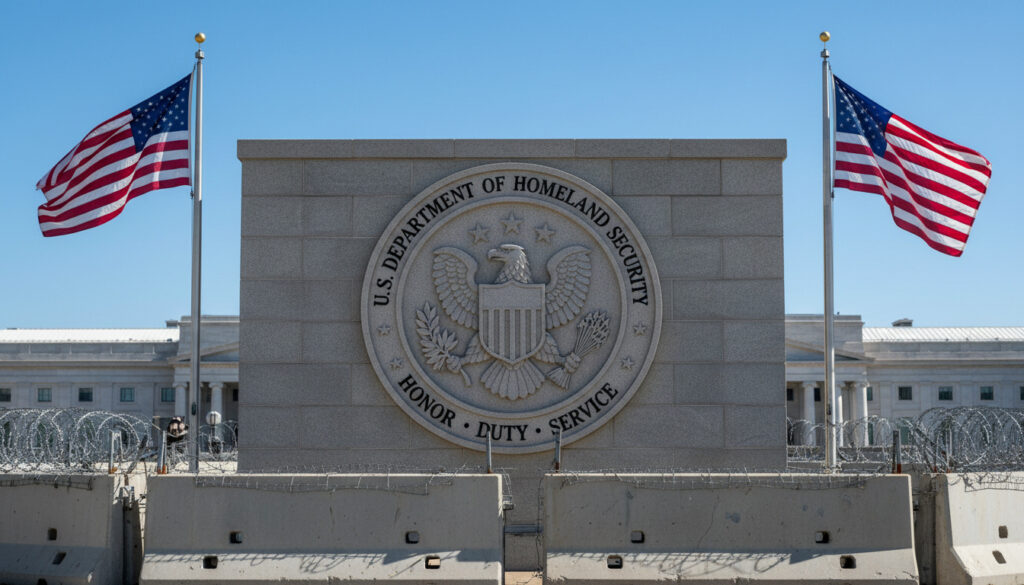
Departamento de Seguridad Nacional de los Estados Unidos – Mission, Agencies, Leadership
The Department of Homeland Security represents the largest federal reorganization of the U.S. government since World War II. Established in response to the September 11, 2001 terrorist attacks, the Department of Homeland Security consolidated 22 previously separate federal agencies into a single cabinet department. With approximately 240,000 employees and an annual budget exceeding $50 billion, DHS maintains responsibility for border security, disaster response, cybersecurity, and counterterrorism operations across the United States.
Operations began in March 2003 under the authority of the Homeland Security Act of 2002. The department’s mandate encompasses both civilian and military functions through component agencies including the Coast Guard, Secret Service, and Transportation Security Administration. For current operational updates and organizational charts, the official DHS website provides authoritative documentation.
What is the U.S. Department of Homeland Security?
| Founded 2002 |
Headquarters Washington, D.C. |
Employees ~240,000 |
Budget (FY2024) $97.3 billion |
The Department of Homeland Security operates across seven core mission areas that define its operational scope and strategic priorities:
- Border security and immigration enforcement through Customs and Border Protection and Immigration and Customs Enforcement
- Counterterrorism and cybersecurity operations managed by the Cybersecurity and Infrastructure Security Agency
- Disaster preparedness and emergency response coordinated by the Federal Emergency Management Agency
- Protection of critical infrastructure across energy, communications, and transportation sectors
- Law enforcement coordination including criminal investigations and protective details
- Maritime security and search and rescue conducted by the U.S. Coast Guard
- Research and development for advanced security technologies and threat detection systems
| Fact | Details |
|---|---|
| Mission | Prevent terrorism, secure borders, enforce immigration laws, ensure disaster resilience |
| Key Agencies | CBP, ICE, TSA, FEMA, Secret Service, CISA, Coast Guard, Science and Technology Directorate |
| Secretary | Current appointee subject to change; verify status at official channels |
| Website | dhs.gov |
| Creation Date | November 25, 2002 |
| Employees | Approximately 240,000+ civilian and military personnel |
| Annual Budget | $50–60 billion (varies by fiscal year appropriations) |
| Headquarters | Nebraska Avenue Complex, Washington, D.C. |
Which Agencies Are Part of DHS?
DHS comprises eight major component agencies organized under operational directorates, each maintaining distinct jurisdictional responsibilities while contributing to the department’s unified security mission.
Customs and Border Protection (CBP)
CBP manages the nation’s land and maritime borders, operating at 328 ports of entry while conducting inspections and interdicting illegal contraband.
Immigration and Customs Enforcement (ICE)
ICE focuses on immigration enforcement within the United States, investigating human trafficking, drug smuggling, and financial crimes related to border security.
U.S. Coast Guard
The Coast Guard operates as a military service within DHS, conducting maritime law enforcement, search and rescue operations, and port security nationwide.
Transportation Security Administration (TSA)
TSA oversees security for commercial aviation, freight rail, and mass transit systems, screening passengers and cargo at approximately 440 federalized airports.
While CBP and ICE handle land borders and immigration enforcement, the Coast Guard manages maritime borders and port security. CISA focuses exclusively on digital infrastructure protection rather than physical border operations.
Federal Emergency Management Agency (FEMA)
FEMA coordinates federal disaster response and recovery efforts, administering emergency preparedness grants to state and local governments. Comprehensive disaster response protocols are available at fema.gov.
U.S. Secret Service
The Secret Service maintains dual responsibilities for protecting national leaders and investigating financial crimes, counterfeit currency, and cyber fraud targeting financial institutions.
Cybersecurity and Infrastructure Security Agency (CISA)
CISA defends federal networks and critical infrastructure against cyber threats, working with private sector partners to secure communications and energy systems.
Science and Technology Directorate
This directorate conducts research and development for new security technologies, testing detection systems and emergency response equipment.
For detailed organizational charts and component-specific authorities, reference the complete agency structure documentation.
Who Leads the Department of Homeland Security?
The Secretary of Homeland Security leads the department as a member of the President’s cabinet, requiring Senate confirmation for appointment.
Cabinet Position and Authority
The secretary coordinates policy across component agencies, advises the President on security matters, and testifies before Congress regarding budget appropriations and operational priorities. This role holds equivalent rank to the Secretary of Defense and Attorney General within the national security apparatus.
Current Leadership Status
As of April 2026, specific current secretary information remains unconfirmed in available documentation. The position undergoes transition with each presidential administration or vacancy. Senate confirmation status and appointment dates require verification through official channels.
Current secretary details change frequently with political transitions. For the most recent appointment status and confirmation dates, consult the White House official website or Senate confirmation records.
When Was DHS Created and What Is Its History?
The Department of Homeland Security emerged from the largest restructuring of federal agencies since the creation of the Department of Defense in 1947.
- : Terrorist attacks prompt congressional and executive discussions regarding consolidation of fragmented security agencies
- : President George W. Bush signs the Homeland Security Act of 2002 establishing the department
- : Tom Ridge confirmed as the first Secretary of Homeland Security
- : DHS officially begins operations, consolidating 22 federal agencies from multiple departments
- : National Protection and Programs Directorate established, later evolving into CISA
- : Enhanced focus on artificial intelligence threats, election security, and domestic terrorism prevention
The 2002 consolidation absorbed agencies from the Departments of Justice, Transportation, Agriculture, and Treasury, creating the third-largest federal cabinet department by personnel count. The Department of Homeland Security was established on March 1, 2003, consolidating 22 federal agencies from multiple departments, and you can learn more about its history at Dick Cheney cause of death.
DHS Today: Key Facts and Operations
Personnel and Scale
The department employs approximately 240,000 personnel, including both civilian employees and military service members through the Coast Guard. This workforce represents one of the largest federal employment categories, spanning all 50 states and U.S. territories.
Headquarters Location
Primary operations center on the Nebraska Avenue Complex in Washington, D.C., with additional facilities throughout the capital region. Regional field offices maintain permanent presence in major metropolitan areas and border zones.
Budget and Resources
Congressional appropriations typically provide $50–60 billion annually, supporting border infrastructure, cybersecurity operations, emergency response capabilities, and personnel training programs. The U.S. Department of Homeland Security (DHS): Comprehensive Overview provides detailed budget allocation breakdowns.
Additional operational support information appears at the federal government services portal.
Understanding DHS Authority and Public Information
| Established Information | Information Requiring Verification |
|---|---|
| Creation date: November 25, 2002 | Current secretary identity as of April 2026 |
| Mission statement and component agencies | Real-time operational threat levels |
| Employee count: ~240,000 | Pending congressional budget appropriations |
| Headquarters: Nebraska Avenue Complex | Active investigation details and enforcement actions |
| Consolidation of 22 predecessor agencies | Specific cybersecurity vulnerability assessments |
The Role of DHS in National Security Context
The creation of DHS marked a fundamental shift in U.S. national security strategy, moving from fragmented agency responsibilities to a unified department addressing terrorism, natural disasters, and cyber threats under one organizational framework. This consolidation eliminated jurisdictional gaps that existed when border security, immigration enforcement, and disaster response operated under separate departmental authorities.
Current operations require coordination with state and local law enforcement, international partners, and private sector infrastructure owners. The department’s scope extends beyond counterterrorism to include election security, pandemic response capabilities, and artificial intelligence risk assessment protocols.
As one of the largest federal employers, DHS maintains operational responsibilities ranging from Secret Service protection details to Coast Guard search and rescue missions in international waters, requiring continuous interagency communication and standardized training protocols.
Official Sources and Mission Statements
The mission of the Department of Homeland Security is to protect the American people, safeguard our borders and economic interests, ensure resilience to disasters, and uphold our values while keeping our nation safe.
— Department of Homeland Security
This mission statement guides operational priorities across all component agencies. Official policy documents and strategic frameworks are published through the Department of Homeland Security website.
Summary and Core Mission
The Department of Homeland Security operates as a cabinet-level department safeguarding U.S. borders, critical infrastructure, and digital networks while coordinating disaster response and immigration enforcement. Since its 2002 establishment, the Department of Homeland Security has maintained a workforce exceeding 240,000 personnel dedicated to counterterrorism, cybersecurity, and emergency preparedness missions across civilian and military component agencies.
Frequently Asked Questions
How many employees does DHS have?
The Department of Homeland Security employs approximately 240,000 personnel across civilian and military component agencies, including the Coast Guard and Secret Service.
Where is DHS headquartered?
DHS headquarters is located at the Nebraska Avenue Complex in Washington, D.C., with additional regional field offices throughout the United States.
How many agencies were consolidated to form DHS?
The Homeland Security Act of 2002 consolidated 22 separate federal agencies from multiple departments into the newly created Department of Homeland Security.
What is the annual budget of DHS?
DHS operates with an annual budget typically ranging from $50 billion to $60 billion, subject to fiscal year congressional appropriations.
Does DHS include military personnel?
Yes, the U.S. Coast Guard operates as a military service within DHS, while most other component agencies employ civilian personnel.
What is the primary mission of CISA within DHS?
The Cybersecurity and Infrastructure Security Agency defends federal networks and critical infrastructure against cyber threats and physical attacks.
How does the Secret Service fit into DHS?
The Secret Service moved from the Treasury Department to DHS in 2003, continuing its dual mission of presidential protection and financial crimes investigation.
More related posts
 Ethan Slater Ariana Grande – Complete Relationship Timeline
 Fufu and Egusi Near Me: Ireland Delivery & Restaurants
 Remote Data Entry Jobs: How to Find Them in Ireland
 50/30/20 Rule: A Simple Budgeting Guide for Irish Households
 Flea Markets Near Me: Dublin’s Best Weekend Markets
 Who Is Elon Musk? Biography, Companies, Net Worth
 Hand Tattoos for Men: Pain, Risks, Best Designs
 What National Day Is Today? Picnic Day & World Book Day
