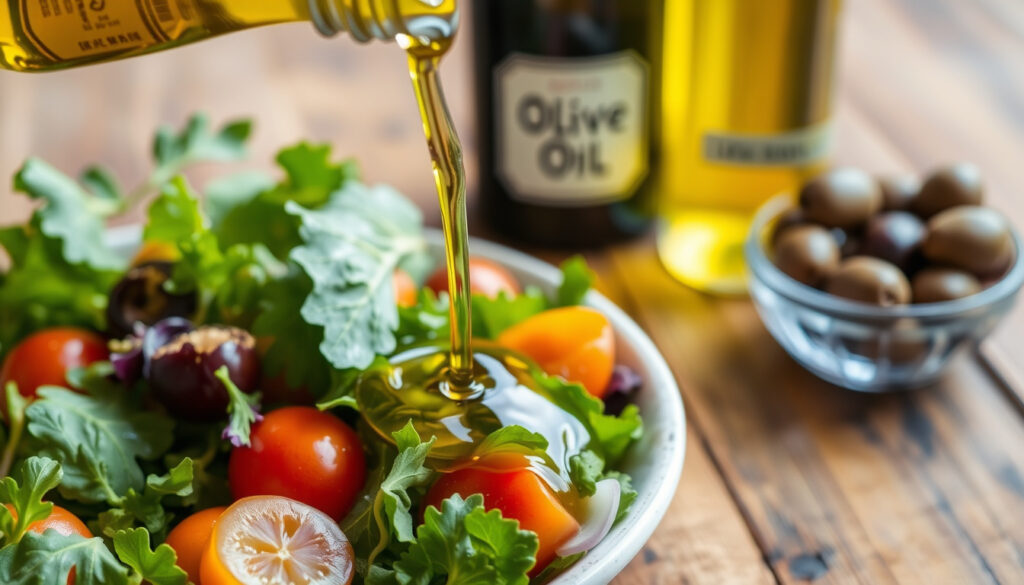
Is Olive Oil Good For You? Benefits, Risks & Daily Guide
Olive oil has been a kitchen staple for centuries, but its health reputation has sparked endless debate. Is it a superfood or just another fat? The answer, it turns out, depends on quality, quantity, and how you use it.
Daily recommended intake: 1–2 tablespoons (15–30 ml) ·
Monounsaturated fat content: 73% ·
Calories per tablespoon: 119 kcal ·
Polyphenol count in extra virgin: Up to 500 mg/kg
Quick snapshot
- Daily consumption improves heart health – Cleveland Clinic (leading hospital)
- Extra virgin olive oil contains anti-inflammatory compounds – Women’s Health Mag (consumer health publisher)
- Safe for most people when used moderately – WebMD (health reference site)
- Whether drinking olive oil before bed specifically improves sleep
- Optimal daily dose for maximum benefits
- Effect on gallbladder in individuals with existing gallstones
- PREDIMED study: 60 ml (4 tbsp) daily for 5 years reduced cardiac events – Healthline (health information publisher)
- More research needed on long-term high-dose effects
- Focus on polyphenol content as key health marker
The pattern is clear: quality and quantity define the health outcome of olive oil consumption.
| Metric | Value |
|---|---|
| Calories per tablespoon | 119 kcal |
| Monounsaturated fat percentage | 73% |
| Polyphenol content (extra virgin) | 100–500 mg/kg |
| Smoke point (extra virgin) | 375°F (190°C) |
| Daily recommended intake | 1–2 tablespoons |
Is olive oil healthy to eat every day?
What happens to your body when you have olive oil every day?
- Regular consumption lowers bad LDL cholesterol and raises good HDL cholesterol – Cleveland Clinic (leading hospital)
- Antioxidants like oleocanthal reduce inflammation markers – Women’s Health Mag (consumer health publisher)
- A 28-year study linked high olive oil consumption to 19% lower cardiovascular death risk – Cleveland Clinic (leading hospital)
The implication: daily olive oil use doesn’t just maintain health—it actively reduces risk of heart disease and cancer over time.
How much olive oil should you consume daily?
- The FDA suggests replacing saturated fats with 1.5 tablespoons (22 ml) of high-oleic oil daily – Healthline (health information publisher)
- In the PREDIMED study, participants used about 60 ml (4 tbsp) per day – Healthline (health information publisher)
- Over 20 ml daily linked to higher bone density in women – Healthline (health information publisher)
The trade-off: more is not always better. Extra calories add up quickly—1 tablespoon packs 119 kcal.
Is it safe to eat olive oil daily?
- Up to 1 liter of extra virgin olive oil per week is considered safe in the context of a Mediterranean diet – WebMD (health reference site)
- However, some people may experience nausea or digestive discomfort – GoodRx (pharmacy-focused health site)
Most people can safely add olive oil daily, but those with sensitive digestive systems should start with small amounts.
Is it good to take a spoonful of olive oil every night?
What are the benefits of drinking olive oil before bed?
- May stimulate bile production and aid overnight digestion – Vinmec (international health provider)
- Traditional practice in Mediterranean cultures often includes a spoonful before sleep
The pattern: while tradition supports it, modern evidence specifically for nighttime consumption is thin.
Does olive oil improve sleep or digestion at night?
- No direct studies confirm that bedtime olive oil improves sleep quality
- Fat digestion takes time, so a small amount may slow overnight gastric emptying
Eating a high-fat snack right before bed can cause acid reflux in some people. Olive oil is no exception.
What does the tradition say about nightly olive oil?
- Italians have long taken a spoonful daily, often in the morning, not necessarily at night
- Some claim it helps with morning bowel regularity
Why this matters: tradition offers cultural wisdom, but individual experimentation with timing is key.
What do cardiologists say about olive oil?
How does olive oil affect cholesterol?
- Oleic acid (73% of olive oil) lowers LDL and raises HDL – Cleveland Clinic (leading hospital)
- Women consuming more olive oil have lower breast cancer risk – Vinmec (international health provider)
The implication: olive oil is one of the few fats that actively improve your lipid profile.
What is the evidence from cardiovascular studies?
- PREDIMED trial: significant reduction in heart attacks and strokes with EVOO – PMC-NIH (U.S. National Institutes of Health)
- High olive oil consumption associated with lower risk of CVD, cancer, and mortality – PMC-NIH (U.S. National Institutes of Health)
Is extra virgin olive oil better for heart health?
- EVOO contains polyphenols that are largely absent in refined olive oil – Women’s Health Mag (consumer health publisher)
- Cardiologists recommend replacing saturated fats with unsaturated fats like olive oil – Cleveland Clinic (leading hospital)
Cardiologists overwhelmingly agree: swap butter and lard for olive oil, and choose extra virgin for maximum benefit.
Does olive oil help with bile?
How does olive oil affect gallbladder function?
- Olive oil stimulates bile secretion from the gallbladder – Vinmec (international health provider)
- Regular bile flow may help prevent gallstones
The catch: for people with existing gallstones, a high-fat meal can trigger pain or an attack.
Can olive oil prevent gallstones?
- Some studies suggest monounsaturated fats reduce gallstone risk
- However, evidence is not conclusive for all populations
What foods are worst for the gallbladder?
- High-saturated-fat foods (red meat, fried foods) are more problematic than olive oil
- Very low-fat diets can also reduce gallbladder emptying, increasing sludge risk
Why this matters: olive oil sits in a sweet spot—it stimulates bile flow without the inflammatory load of animal fats.
Is there a downside to drinking olive oil?
What are the side effects of taking olive oil daily?
- Excessive consumption can lead to weight gain – 1 tbsp = 119 kcal – GoodRx (pharmacy-focused health site)
- Some experience digestive upset, diarrhea, or cramping – GoodRx (pharmacy-focused health site)
- Allergic reactions are rare but possible
Can drinking olive oil cause acne or digestive issues?
- No strong evidence links olive oil directly to acne
- High intake may worsen existing digestive conditions like IBS
Is it safe to drink olive oil in large amounts?
- Amounts above 2-3 tablespoons daily without compensating calories can cause weight gain
- Low-quality olive oil may lack beneficial polyphenols – Healthline (health information publisher)
A daily tablespoon is beneficial; drinking half a cup is not. Quality and moderation are non-negotiable.
Is olive oil good for you if heated?
Is olive oil good for frying?
- Extra virgin olive oil has a smoke point of 375°F (190°C) – WebMD (health reference site)
- It is suitable for sautéing and low-temperature frying
- Cooking with olive oil linked to lower heart disease risk vs other oils – WebMD (health reference site)
What is the smoke point of olive oil?
- Extra virgin: 375°F (190°C)
- Refined olive oil: 465°F (240°C)
Does heating olive oil destroy its health benefits?
- Heating degrades some antioxidants, but monounsaturated fats remain stable – McEvoy Ranch (olive oil producer)
- Avoid overheating to smoke point to prevent harmful compound formation
What this means: you don’t need to avoid heating olive oil—just don’t deep-fry with it at extreme temperatures.
Upsides
- Lowers bad cholesterol and raises good cholesterol
- Rich in anti-inflammatory polyphenols
- Supports heart health and reduces mortality risk
- Safe for daily use in moderate amounts
- Versatile for cooking and raw use
Downsides
- High calorie content can cause weight gain
- May cause digestive upset in some people
- Quality varies widely; low-quality oils offer fewer benefits
- Heating reduces some antioxidant content
- Can trigger gallbladder pain in susceptible individuals
Clarity: what we know and what we don’t
Confirmed facts
- Daily olive oil consumption improves heart health – Cleveland Clinic (leading hospital)
- Extra virgin olive oil contains anti-inflammatory compounds – Women’s Health Mag (consumer health publisher)
- Olive oil is safe for most people when used moderately – WebMD (health reference site)
What’s unclear
- Whether drinking olive oil before bed specifically improves sleep
- Optimal daily dose for maximum benefits
- Effect on gallbladder in individuals with existing gallstones
- Impact of long-term high-dose consumption on weight beyond calorie balance
- Whether refined olive oil retains meaningful health benefits
What experts say
“Olive oil is a healthy fat that should be included in the diet.”
– Dr. Frank Hu, Harvard School of Public Health
“Replace saturated fats with unsaturated fats like olive oil.”
– American Heart Association
For anyone standing in the grocery aisle wondering whether to buy that bottle of extra virgin olive oil, the evidence is clear: incorporate it daily, but don’t treat it as a free pass. The difference between health boost and health risk comes down to dosage and quality.
Related reading: Is Gatorade Good for You?
Frequently asked questions
Is olive oil good for your skin?
Olive oil can moisturize skin and contains antioxidants, but it may clog pores for acne-prone skin. Patch test before using as a moisturizer.
Does olive oil help with weight loss?
In moderation, it promotes satiety and can replace less healthy fats. But at 119 kcal per tablespoon, overuse works against weight loss.
Can I use olive oil for baking?
Yes, olive oil works well in baking. Use it as a substitute for butter or vegetable oil in recipes, but expect a slightly fruity flavor.
What is the best olive oil to buy?
Look for extra virgin olive oil from a single origin with a harvest date. Dark glass bottles protect against light damage.
Is olive oil good for hair?
Olive oil can condition hair and reduce frizz when used as a pre-wash treatment. Avoid using too much on fine hair.
Can drinking olive oil cause diarrhea?
Yes, consuming large amounts—especially on an empty stomach—can cause loose stools or diarrhea in sensitive individuals.
Does olive oil expire?
Yes, olive oil oxidizes over time. Store in a cool dark place and use within 18-24 months of harvest.
More related posts
 Neil Patrick Harris’ Amy Winehouse Controversy Apology
 $800 Stimulus Check Eligibility Criteria in April
 Free Phone Number Lookup: Tools & Methods That Work
 Mission Impossible Dead Reckoning Part 2: 2025 Release & Flop
 Hook (1991) Film: Box Office, Cameos, Reviews & FAQ
 Is Battlefield 6 Cross Platform – Full Crossplay Guide and Details
 Is Elon Musk a US Citizen – Timeline, Facts & Eligibility
 Woman in the Window: Twist, Killer, Ending & Worth Watching
